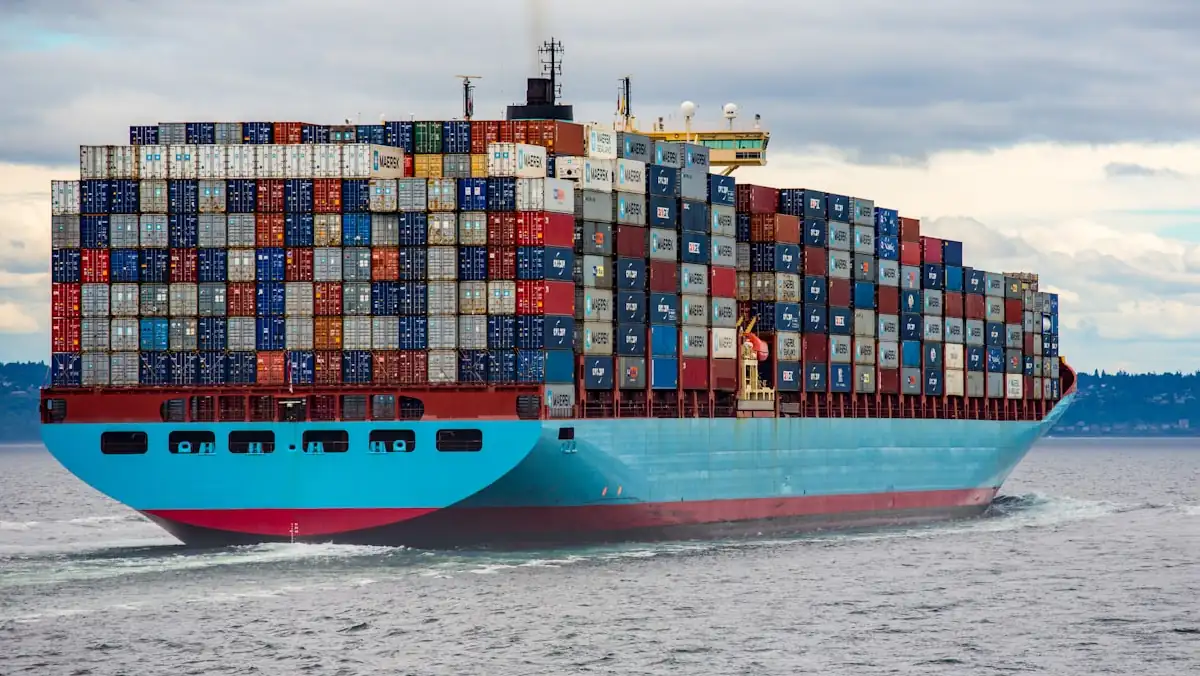
After the transpacific GRI solo, Europe starts a second push: MSC's Aug 15 FAK lands
[Updated Aug 28] The second round of Europe pushes has failed and the lane has rolled into a downcycle: the Aug 21 SCFI Europe leg printed $2,842/TEU (-3.5% w/w) and the Mediterranean $3,767/TEU (-4.12%), fully giving back the early-August rebound; Drewry's Aug 27 WCI shows Shanghai-Rotterdam down 3% to $4,287/FEU and Shanghai-Genoa down 2% to $4,866/FEU. Quote centers are also drifting lower — the MSC and CMA CGM FAKs effective Aug 15 ($7,800/$6,200 to North Europe) were already $800-1,400 below mid-July levels, and several carriers have cut further for early September. With MSC's limited Suez resumption adding expectations of capacity returning, the divergence from the transpacific keeps widening. The pre-Golden Week pulse remains the only supportive window — see the update in section 3.
TL;DR: After Aug 1 transpacific GRIs landed, Asia-Europe carriers did not give up on pricing: MSC announced a new FAK effective Aug 15 — $7,800/FEU Asia-North Europe and $6,700/FEU Asia-Mediterranean — stacked with August peak season surcharges (PSS) and emergency fuel surcharges (EFS). In early August the SCFI's Europe and Mediterranean legs snapped a four-week decline with a small rebound; Drewry's WCI Shanghai-Rotterdam and Shanghai-Genoa held relatively firm but stayed below carrier FAK targets. Unlike the transpacific, where volume plus capacity discipline both cooperated, Europe's core problem remains cargo: after the first round's "support quickly waning," the second round's follow-through will set the direction for late-August and September. Here are the key numbers and our Aug-Sep booking advice.
1) Recap: Aug 1 transpacific GRI lands, Europe's first round gets voted down
As tracked in the previous post, Aug 1 transpacific GRIs of about $2,000-3,000/FEU pushed USEC quotes past $10,000 and some USWC quotes above $9,000; the July 31 SCFI composite jumped 4.67% in a week, with both US coasts up about 12.5%. Asia-Europe carriers issued Aug 1 hike notices too, but the market shrugged — Linerlytica reported carriers offering below $5,000/FEU on Asia-Europe, with "support for the 1 August rate hike quickly waning."
The WCI confirmed it: on July 30, Shanghai-Rotterdam fell 3% to $4,677/FEU and Shanghai-Genoa dropped 6% to $5,630/FEU, while the SCFI's Europe and Mediterranean legs each lost about 4%. Capacity discipline was also thinner on Europe: three blank sailings were scheduled on Asia-Europe in the first week of August, down from four the week before — setting up the second-round attempt.
2) The second push: MSC's Aug 15 FAK at $7,800 / $6,700
With the first round fizzling, MSC opened the second round: from Aug 15, a new FAK of $7,800/FEU for Asia-North Europe and $6,700/FEU for Asia-Mediterranean. Working from the late-July spot benchmark of $4,677/FEU Shanghai-Rotterdam, the North Europe FAK lands about 67% above spot; from $5,630/FEU Shanghai-Genoa, the Mediterranean FAK is about 19% above. The bigger the premium, the harder the landing — the core difference from the transpacific, where GRIs pushed "with" volume and capacity, while Europe's FAK is closer to "pushing against" the tape.
Beyond FAK, August Europe quotes stack two more surcharges: peak season surcharge (PSS), with several carriers applying $500-1,000/FEU on Asia-Europe and Asia-Mediterranean from August; and emergency fuel surcharge (EFS), tied to Middle East-driven fuel costs. Combined, mid-August North Europe mainstream carrier quotes cluster in the $7,300-8,800/FEU range and Mediterranean in the $6,700-7,700/FEU range — but these are "quote centers," and whether they transact still depends on cargo.
3) SCFI Europe snaps four-week decline: small rebound, unproven follow-through
Early August SCFI offered a slightly constructive signal: the Europe and Mediterranean legs snapped four straight weekly declines with a small rebound. This lines up with the carrier second-round push on Europe after the transpacific GRI — quotes rebounded before transactions. Repeat the caveat: the SCFI records rates quoted for the coming week, with carriers making up about half the sample, so the rebound reflects intent more than done deals.
At the transaction level, the latest Drewry WCI Shanghai-Rotterdam and Shanghai-Genoa steadied somewhat versus late July but remained clearly below carrier FAK targets. Put differently, there is still a visible gap between "quote" and "deal," and whether it closes before late August hinges on whether the pre-Golden Week shipping pulse materializes.
[Updated Aug 28] The second round fails: Europe rolls into a downcycle, divergence from the US lanes widens
Subsequent trading has now answered the "follow-through" question — decisively no. The Aug 21 SCFI Europe leg printed $2,842/TEU, down 3.5% on the week, with the Mediterranean at $3,767/TEU, down 4.12%, fully unwinding the early-August rebound; Drewry's Aug 27 WCI shows Shanghai-Rotterdam down 3% to $4,287/FEU and Shanghai-Genoa down 2% to $4,866/FEU, widening the gap to the $7,300-8,800 FAK+PSS quote center. More telling, the quotes themselves are loosening: the MSC and CMA CGM FAKs effective Aug 15 ($7,800 and $6,200/FEU to North Europe respectively) were already $800-1,400 below mid-July levels, and several carriers have cut quotes further for early September — the "second push" was, in reality, rhythmic price support within a falling quote center.
New downside supply pressure is also building: after a "comprehensive security assessment," MSC has cautiously resumed a limited number of east-west services through the Suez Canal (at least seven transits in the past three weeks), and the Maersk/Hapag-Lloyd Gemini AE19 service has structurally returned to Suez — if resumption widens, capacity absorbed by Cape of Good Hope diversions will gradually flow back into Europe lanes. Meanwhile inland Europe costs are moving the other way: low Rhine water levels have led MSC to levy a €1,350/TEU barge surcharge at Kaub and Maersk to add €625/box at Andernach (€350 at Bonn), on top of earlier German port strike disruption — a "ocean rates down, inland costs up" landed-cost structure worth tracking. For shippers: the window before the early-September pulse is a negotiating window — carriers are loosening quotes while the pre-Golden Week rush has not yet arrived, so flexible cargo can lock in tranches at lows; cargo that must ship in the two weeks before Golden Week should guard against a double lift from short-lived tightness and inland surcharges.
4) Europe's core problem: cargo
Europe's biggest gap versus the transpacific is on the demand side. The transpacific has "importers keeping shipping steadily under a clearer tariff regime" as support; Europe faces a triple headwind: soft Eurozone consumption, with inflation falling but household purchasing power recovering only slowly and retail restocking weaker than expected; ongoing Red Sea diversions around the Cape of Good Hope as the baseline, adding 10-14 days per voyage and keeping nominal capacity tight, though extra loaders and transshipment have absorbed some of that; and a high base effect from 2025, with Europe rates already at relatively elevated levels and limited room to push higher.
On capacity management, Asia-Europe blank sailings did not materially expand in August — in contrast with the transpacific's more aggressive "blank to hold" posture. Without capacity discipline and without cargo support, the odds of Europe's second FAK round fully landing remain in question.
5) The pre-Golden Week pulse: Europe's "last window" to validate the hike
By the usual rhythm, the two-to-three weeks before China's National Day holiday in late September are the concentrated pre-holiday shipping window; this year, with the Mid-Autumn Festival in early October, the pulse may cluster even tighter. If Europe cargo picks up as expected in mid-to-late September, the Aug 15 FAK+PSS quote center could get transactional validation in September; if volume disappoints, the FAK is likely to ease back toward late-July spot levels by mid-to-late September.
Worth noting: National Day blank-sailing plans are typically announced around mid-September. If blankings scale up materially and overlap with the shipping pulse, late September could see short-lived "structural tightness" on Europe — but this is window tightness, not a trend, and rates easing back after peak season remains the base case.
6) Aug-Sep Europe booking advice
Given the current rhythm, we suggest layering bookings by schedule flexibility:
- Cargo that must ship in the next two weeks: with MSC's Aug 15 FAK+PSS freshly stacked, carriers are most committed to holding the line and negotiating room is thinnest — focus on space confirmation and cut-off times to avoid peak-season rollovers; still compare at least 2-3 carriers per lane, as FAK-to-spot spreads can be wide
- Flexible cargo: watch how the hike holds into late August and early September — if volume disappoints and the FAK loosens, ship in batches to average down; if the pre-Golden Week pulse plus blank sailings land, mid-to-late September could see short-lived tightness, so lock forward space early
- Pin down the quote basis: Europe August quotes stack FAK, PSS, EFS, and BAF (bunker adjustment factor) — confirm whether all surcharges are included, the validity window (peak-season spot quotes often run just 7-14 days), and whether space and equipment are guaranteed; a cheap quote without guaranteed space means little
- North Europe vs Mediterranean by lane: MSC's FAK targets North Europe at $7,800 and Mediterranean at $6,700 — the North Europe premium is higher and the landing harder, while the Mediterranean has a firmer spot base and more real pricing power; if destination is flexible, compare inland transit costs from North Europe (Rotterdam/Hamburg/Felixstowe) versus Mediterranean (Valencia/Genoa/Barcelona)
- Red Sea diversion remains the baseline: Asia-Europe routing around the Cape of Good Hope is still standard, adding 10-14 days per voyage — build adequate schedule buffer; if time-sensitive, evaluate China-Europe rail and air freight alternatives in parallel
- Contract vs. spot mix: how well Europe's Q3 push holds will set the baseline for Q4 and next year's contract talks; keeping core volumes on contract and flexible volumes on spot still applies
7) Closing: Europe's hike enters the "second-round validation window"
After the transpacific GRI landed, Europe did not go quiet — it opened a second push with MSC's Aug 15 FAK+PSS. But unlike the transpacific, where volume and capacity discipline both cooperated, Europe's core problem remains cargo. Under the triple headwind of soft Eurozone consumption, lighter capacity management than the transpacific, and a high 2025 base, whether the FAK can close its gap to spot before late August depends on whether the pre-Golden Week pulse materializes. Mid-to-late September's blank-sailing plan and volume cadence will give a much clearer directional signal.
If you need Asia-Europe or Mediterranean ocean export bookings, multi-carrier rate comparison, FAK/PSS/EFS quote-basis checks, or help balancing contract and spot exposure, contact Mighty International — we can build a steadier space-and-cost plan around your volume cadence and delivery deadlines.