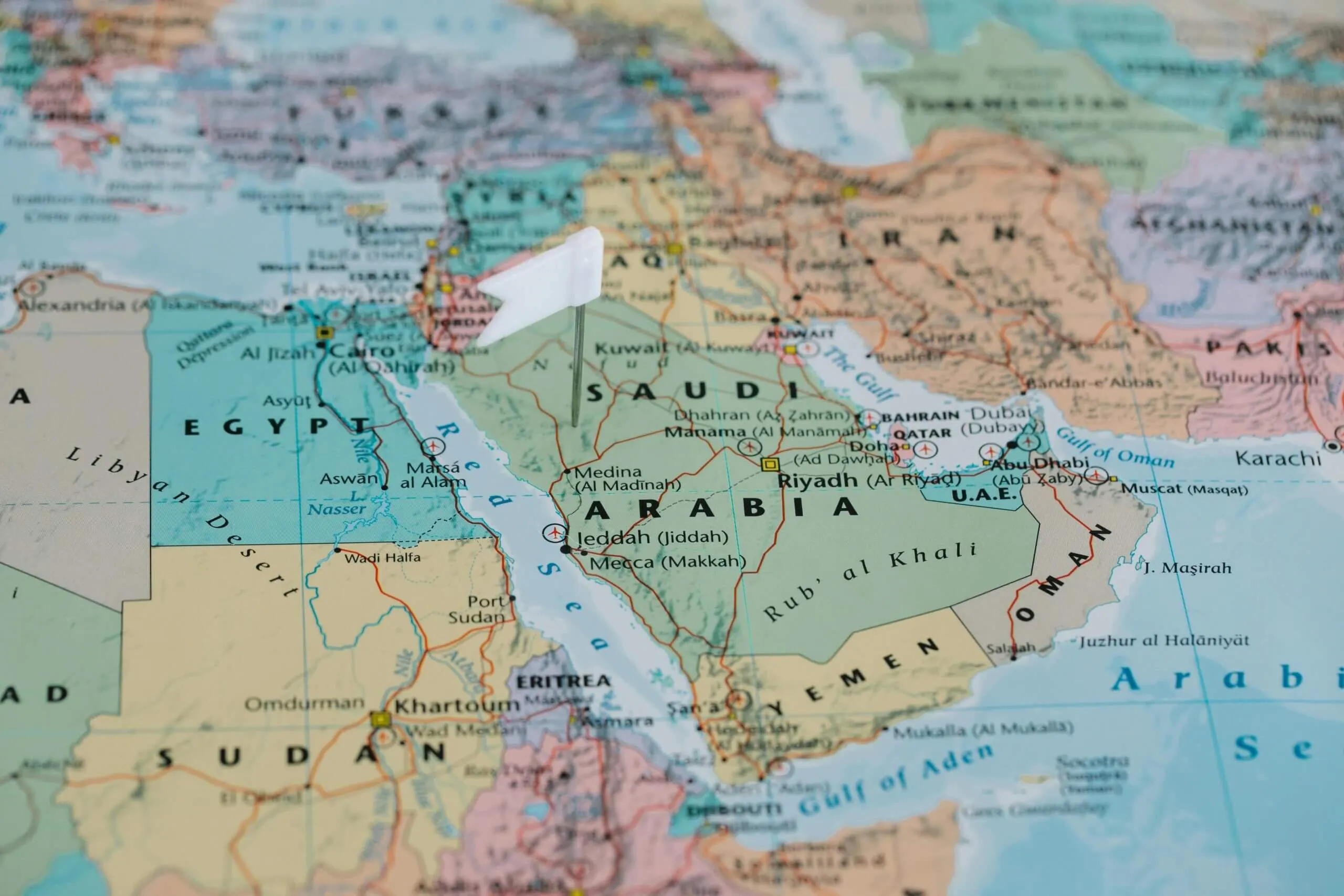
Three months into the blockade: the latest transit data, insurance, and rerouting playbook for Hormuz
Editor's note: It has been nearly three months since the US-Israeli strikes on Iran and the Strait of Hormuz closure on February 28, 2026. As of mid-to-late May, daily transits remain at 2%–4% of the historical norm, with about 22,500 mariners stranded on 1,550+ commercial vessels. War-risk insurance for tankers is holding at 3%–8% of hull value — roughly 30 to 40 times the pre-crisis baseline. Looking ahead to June: prediction markets put the probability of "normalization by June 30" at only ~52.5%, while DHL's Middle East and Africa unit tells customers that full normalization will take at least 4–6 months. This article consolidates the latest public data from JMIC, UKMTO, Drewry WCI, Freightos and Lloyd's List, focusing on what shippers and forwarders most want to know: real May transit numbers, insurance dynamics, carrier moves, executable rerouting options, and the June window — surcharge stacking, blank-sailing wave, and Dragon Boat cut-off.
1. Latest transit snapshot (mid-to-late May)
Based on JMIC Advisory #041 (issued May 5) and several real-time maritime trackers, commercial throughput through the Strait of Hormuz stays at historic lows. When weighing whether a voyage is feasible, carriers and cargo owners should anchor decisions on these hard indicators:
| Indicator | Pre-crisis level | Current level (May 2026) |
|---|---|---|
| Daily Hormuz transits | ~ 95–138 vessels/day | 2–6 vessels/day (6 on May 3, 5 on May 4) |
| Stranded mariners | — | ~ 22,500 (on 1,550+ commercial vessels) |
| War-risk insurance (% of hull) | 0.02%–0.05% | 3%–8% (some stranded tankers quoted at 10%) |
| VLCC (Very Large Crude Carrier) day rate | Normal range ~ USD 40k–60k | Peak USD 423,736/day (early March, all-time high) |
| UKMTO cumulative vessel incidents | — | 41+ incidents reported since late February |
| JMIC risk rating | — | Persian Gulf, Hormuz, Gulf of Oman, Arabian Sea: all CRITICAL |
2. Key events recap since May
- May 3: UKMTO reports a bulk carrier near Iran attacked by multiple small craft; several vessels at anchor are radioed to move from their original anchorages.
- May 4: A tanker is struck by unidentified projectiles north of Fujairah, UAE; marine insurers and shipping brokers tighten risk assessments.
- May 5: The US-flagged chemical tanker CS Anthem successfully transits the Strait under US Navy escort, becoming the second documented escorted US-flagged transit after the Alliance Fairfax.
- May 6: US Joint Chiefs Chairman General Caine confirms that approximately 22,500 mariners remain stranded in and around the Strait.
- Mid-May: A merchant vessel at anchor off the UAE is seized and towed toward Iran; another cargo ship near Oman sinks after being attacked.
- Late May: The IRGC Navy announces that 33 commercial vessels were allowed to transit within a 24-hour window, but actual sailings remain constrained by operators' dual uncertainty over vessels and insurance.
3. The insurance market: war-risk has become the "shadow freight rate"
Whether a ship can sail no longer depends only on physical access to the Strait — it depends on whether the owner can find affordable war-risk cover. The May market shows three defining features:
- Six P&I clubs have withdrawn Persian Gulf-related protection and indemnity cover. New underwriting appetite is now concentrated among large European, US, and Asian reinsurers.
- The US government has announced a USD 20 billion reinsurance program, fronted by the US International Development Finance Corporation (DFC), aiming to use government backstops to rebuild private-insurer confidence so that some carriers can resume limited transits.
- Market quotes show that rates for shipowners tied to China, India, or Pakistan typically sit at the upper end of the range. Some stranded Long Range (LR) tankers have been quoted at up to 10% of hull value.
For cargo owners and forwarders: Even when a carrier announces a "successful escorted transit," it does not mean costs are back to pre-crisis levels. For May–June bookings, spell out who absorbs War-Risk Insurance / War Risk Surcharge (WRS), the cap, and the trigger conditions, so the carrier cannot later add charges unilaterally citing "market rate movements."
4. Carrier round-up (May)
- Maersk, MSC, CMA CGM, Hapag-Lloyd: All major liner operators continue to suspend or strictly limit new bookings via Hormuz; Cape of Good Hope diversions on the Asia-Europe trade have become the norm.
- COSCO Shipping Lines: After restoring limited new bookings for selected Gulf countries in March, COSCO is in May holding to a port-by-port phased acceptance strategy. Local cargo for Jebel Ali and Abu Dhabi remains stable, while Iran and high-risk anchorages are still avoided.
- Regional / feeder carriers: Intra-Gulf cargo continues to depend on Indian hubs (Mundra, Nhava Sheva) with trucking or feeder onward to the Gulf; some Red Sea / Jeddah cargo is rerouted via Casablanca, Algeciras, or Port Said.
- US-flag escorted transits: The US Navy has now escorted at least two US-flagged merchant vessels through the Strait, but escort resources are far too limited to restore commercial volumes — these remain "symbolic flows."
- European escort missions (Operation Aspides): France has deployed two frigates; the UK, Germany, and Italy provide additional support covering certain EU-member-flagged vessels.
5. Alternative routes and workarounds
5.1 Pipeline and alternate port diversion (for oil and energy cargo)
- Saudi Arabia: Crude from eastern fields is increasingly routed through the East-West Crude Oil Pipeline to Yanbu on the Red Sea, bypassing Hormuz.
- UAE: The Abu Dhabi Crude Oil Pipeline moves crude to Fujairah on the Gulf of Oman for onward loading.
- Limited substitution: Total pipeline throughput is only a fraction of normal Strait flow, and storage and loading capacity at substitute ports are bottlenecks — they cannot replace normal Hormuz transit.
5.2 Transshipment and port changes for containerized cargo
- Intra-Gulf destinations: When booking, prioritize routings via major Indian west-coast hubs (Mundra / Nhava Sheva) with onward truck or feeder to Jebel Ali, Dammam, Bahrain, Doha, and confirm the land-leg pickup agent in advance.
- Red Sea / Jeddah cargo: Assess feasibility through western Mediterranean hubs (Casablanca, Algeciras) or Port Said in Egypt, watching transshipment-hub congestion and transit times closely.
- Asia-Europe and Mediterranean lanes: Mainline carriers continue Cape diversions, adding +10–14 days per voyage, with GRIs (General Rate Increases) and PSS (Peak Season Surcharges) repeatedly applied.
5.3 Multimodal options (China-Europe rail freight and sea-land combinations)
- For Europe-bound time-sensitive cargo, evaluate China-Europe Railway Express services (originating from Qingdao, Lianyungang, Xi'an, etc.) — the transit-time advantage versus ocean is roughly 15–20 days.
- For Central Asia and Iran land-bound cargo, explore TIR road transport or rail-sea combinations to bypass the Strait risk entirely.
- Combine with the latest rail and port capacity data in our 2026 multimodal transport corridors article when choosing options.
6. June 2026 outlook: surcharge stacking, blank-sailing wave, and Dragon Boat cut-off
Heading into June, traders face pressure from three directions: carriers stacking more surcharges, blank sailings tightening on east-west trunk lanes, and the Dragon Boat Festival holiday bringing China-side cut-off forward. As of late May, prediction markets (Polymarket) put the probability of Hormuz traffic returning to normal by June 30 at only ~52.5%, and DHL Global Forwarding's Middle East and Africa unit has been even more direct with customers: full normalization will take at least 4–6 months.
6.1 The "coin-flip" signal for June normalization
- Incremental easing: On May 20, Iran coordinated the passage of 26 commercial vessels in a single day — a phase-high since the crisis began, yet still far below the historical 60–140 vessels/day benchmark.
- "Reopening ≠ flowing": Even if a ceasefire framework is reached, mine clearance still needs roughly six months, and underwriters will require "sustained stability" before lowering rates.
- What this means for June bookings: Do not treat any single "escorted transit" or "N vessels released" headline as a recovery signal. Continue scheduling against a baseline of Cape of Good Hope diversion + 10–14 days.
6.2 The June surcharge stack: ECS / EFS / WRS / PSS / GRI at a glance
| Surcharge | Carrier action (late May – June effective) | Reference amount |
|---|---|---|
| ECS – Emergency Conflict Surcharge | CMA CGM, MSC and others continue charging on Middle East exports — covering Iraq, Bahrain, Kuwait, Yemen, Qatar, Oman, UAE, Saudi Arabia, Jordan, Egypt (Sokhna), Djibouti, etc. | 20': USD 2,000 / 40': USD 3,000 / Reefer & special: USD 4,000 |
| EFS – Emergency Fuel Surcharge | MSC updated its EFS effective May 1 for Far East to US & Canada exports, covering East Coast, West Coast and Canada main ports | Adjusted dynamically by lane |
| WRS – War Risk Surcharge | Hapag-Lloyd and others maintain WRS for Middle East and Persian Gulf; some carriers add ~USD 3,000 for 40' Gulf-bound boxes | USD 1,500–4,000/box |
| PSS – Peak Season Surcharge | Stacked from May onward on Transpacific, Asia-Europe and Mediterranean lanes, with a new window expected in June | USD 250–1,000/box (some Middle East lanes USD 800–1,000) |
| GRI – General Rate Increase | Drewry WCI on May 7 at USD 2,286/FEU (+3%); Transpacific +6%, Asia-Europe +2%; carriers continue pushing GRIs into June | Up to USD 2,000/box on Europe; ref. USLA USD 3,062/FEU, USNY USD 3,721/FEU |
| EFI – Emergency Freight Increase | Applied for Persian Gulf destination cargo | USD 3,000/FEU+ |
6.3 The June blank-sailing wave: 34 east-west voyages canceled in 5 weeks
- Drewry's Cancelled Sailings Tracker shows that across Weeks 20–24 (approx. May 18 – June 21), 34 voyages are scheduled to be blanked on east-west mainline trades, about 5% of the 702 planned sailings.
- 47% of the blanks are concentrated on the Transpacific Eastbound (US-bound pressure highest); 32% on Asia–Europe/Mediterranean; 21% on Transatlantic.
- Operational takeaway: For US-bound cargo, book 7–10 days earlier than usual to lock space; for Europe and Mediterranean lanes, avoid carrier blank-sailing windows around the Dragon Boat holiday.
6.4 China Dragon Boat Festival (June 19–21, 2026): cut-off brought forward
- The 2026 Dragon Boat holiday in China runs Friday June 19 – Sunday June 21. Most factories close early, and customs brokers and trucking queues already congest from the afternoon of June 18.
- Port and customs typically apply a "document cut-off = 24–48 hours before departure" rule; documentation density in the week before the holiday is usually 1.5–2x normal.
- For cargo planning to sail in the second half of June, move document cut-offs 3–5 days earlier and build in warehouse and trucking buffers to absorb post-holiday congestion in the first week back (June 22–26).
6.5 Bunker fuel: the real June "black swan" is in Singapore
- After the Hormuz closure, Singapore VLSFO (Very Low Sulfur Fuel Oil) prices jumped over 35% in short order. They've since corrected ~9%–15% from the peak but remain about 55% higher than pre-war levels.
- The market worries about an actual bunker shortage in the next 2–3 months. If it materializes, carriers will resort to slow-steaming and blank sailings, and only then could spot rates break through today's "surcharge ceiling."
- Recommendation: For June–August long-term clients, reassess whether the index linkage in BAF/EBS fuel surcharge formulas is still reasonable. Spot clients should track weekly Singapore VLSFO quotes as a leading indicator for rate inflection.
6.6 Q2 quarter-end: three things to finish before June 30
- Payment terms and receivables: Reconcile delayed receivables from Cape diversions with buyers before June 15 to protect your half-year financials.
- L/C amendments: For any L/C expiring before end-June, submit shipment-date and negotiation-period amendments to the issuing bank by June 5, ahead of Dragon Boat holiday processing lags.
- Inventory accounting: Close out stranded and in-transit cargo in your system by June 25, separating "in-transit / in-warehouse / at destination" to keep Q2 reports clean.
7. Recovery timeline: why "reopening ≠ recovery"
Even if the Strait of Hormuz reopens in the coming weeks, foreign-trade companies should not be overly optimistic. Recovery requires healing across three layers — ports, insurance, and ship supply:
- Clearing sea mines could take up to six months. US defense officials estimate that uncertainty remains around the number and placement of mines, and demining will require sustained international naval coordination.
- War-risk premiums will not fall immediately on reopening. Underwriters typically require several months of sustained stability before resetting rates, so May–June quotes will continue to reflect historical incidents.
- Convoyed transits can only sustain narrow coastal corridors, far below the normal 95–138 vessels/day. Lloyd's List editor Richard Meade estimates that even with an immediate reopening, tanker and oil markets would not normalize until at least September.
- Seafarer supply is strained. Mental health, contract expirations, and blocked crew changes among stranded mariners have become a real constraint on carrier rebooking.
8. Six May–June action items for traders
- Build in schedule and payment-term buffer: For Europe and Mediterranean lanes, plan delivery, receivables, and inventory cycles using normal transit + 14 days. For cargo sailing in the second half of June, move document cut-offs forward by 3–5 days to avoid customs and trucking congestion around the Dragon Boat holiday (June 19–21).
- Tighten surcharge clauses: For WRS, PSS, GRI, ECS, EFS and others, clearly specify who pays, the cap, and the notice window. Long-term contracts should add a fuel-index linkage clause and track Singapore VLSFO quotes.
- Add insurance cover: For cargo via Persian Gulf, Red Sea, or Suez routings, add war risk and strike risk. See our Marine Insurance service page for the scope of cover.
- Amend L/Cs early: For any L/C expiring before end-June, submit shipment-date and negotiation-period amendments by June 5, ahead of Dragon Boat holiday lags at the issuing bank.
- Multi-carrier, multi-port backups: Keep quotes and space with at least 2–3 carriers per destination. With 34 blank sailings concentrated in Weeks 20–24, book US-bound cargo 7–10 days earlier than usual, and prepare at least one Indian west-coast transshipment alternative for intra-Gulf points.
- Keep buyers informed and documented: Notify buyers in writing about every delay, port change, contract amendment, or surcharge adjustment. Archive cut-off changes, customs progress, and trucking arrangements around Dragon Boat daily — useful for Q2 reports and dispute review.
9. How Mighty International can help
With 26 years of operating at Qingdao Port, Mighty International is supporting foreign-trade clients through the evolving May–June 2026 Hormuz crisis with:
- Multi-carrier rate comparison and space lock-in on Persian Gulf, Red Sea, Asia-Europe, and Mediterranean lanes, with active tracking of carrier escort, suspension, and June surcharge / blank-sailing notices.
- Port-change, rebooking, and alternative-route design (via Indian west-coast hubs, North African / Southern European hubs, and Gulf of Oman / Red Sea port diversions) and execution.
- Marine insurance configuration for war, strike, and detention risk, with multi-underwriter rate comparison.
- Customs declaration, certificate of origin, and L/C document support — including pre-cutoff planning for the Dragon Boat holiday and Q2 quarter-end.
- China-Europe rail and multimodal alternatives, mapped against your cargo profile and time requirements.
10. References
- Wikipedia — 2026 Strait of Hormuz crisis
- UN News — Uncertainty continues over safety in the Strait of Hormuz
- USNI News — Strait of Hormuz Commercial Transits at Lowest Level
- Tank Transport — Hormuz Supply Risk: 9 Critical Updates
- IMO — IMO Middle East / Strait of Hormuz Hot Topic
- Khaleej Times — Strait of Hormuz reopening won't mean cheaper shipping as insurance premiums surge
- Freightos — Strait of Hormuz Shipping Impact: What You Need to Know
- SeaVantage — Strait of Hormuz Crisis 2026: Full Timeline & Ocean Freight Impact
- Polymarket — Strait of Hormuz traffic returns to normal by end of June?
- Al Jazeera — When will Strait of Hormuz be 'safe' for commercial shipping again?
- Earlier update from us — April 2026 Middle East Route Storm: Rates & Rebooking Guide
- Earlier update from us — Middle East Shipping Crisis Update: Limited Hormuz Transit, Red Sea Risks Persist