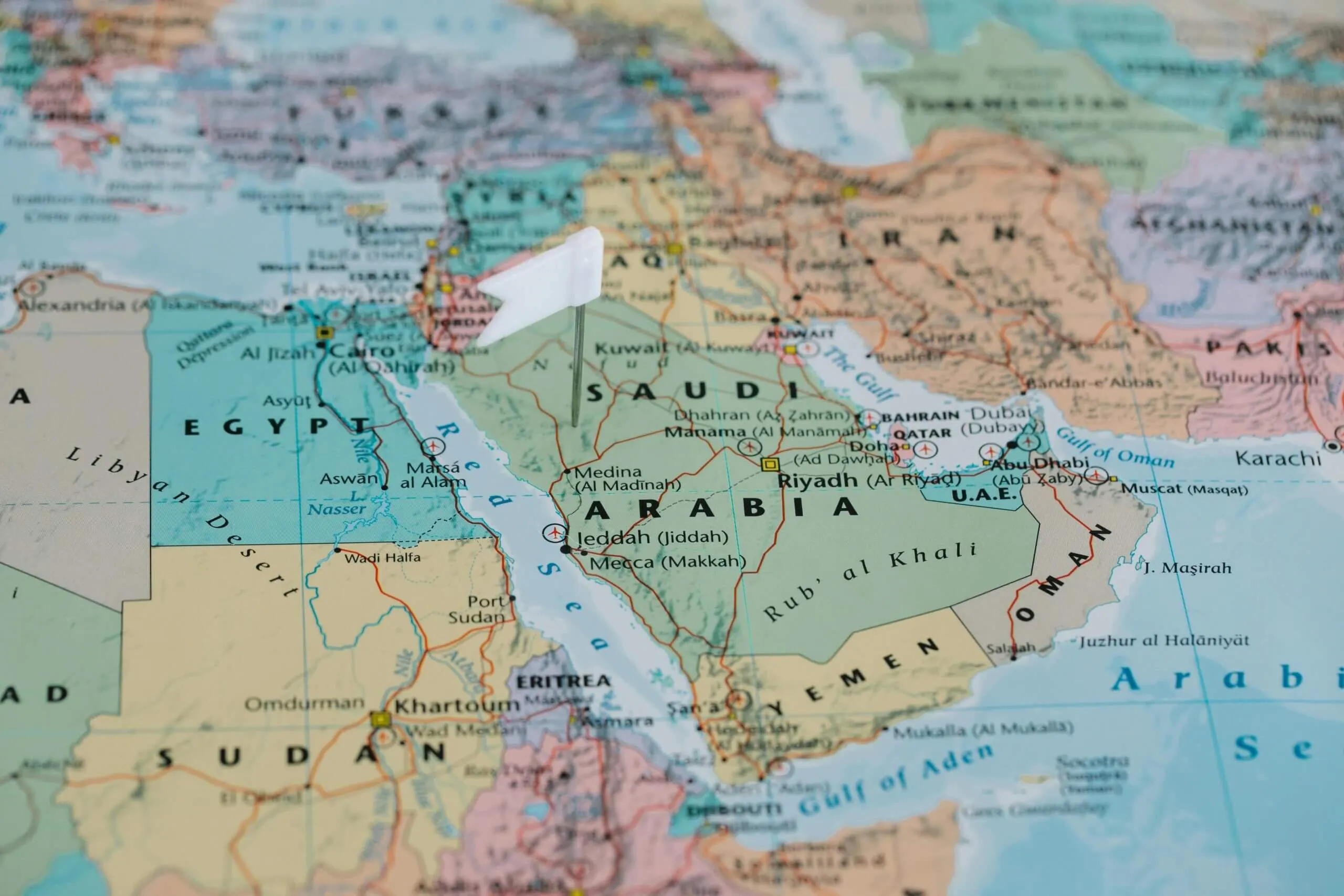
Hormuz and the Red Sea remain in a high-risk stalemate as cargo shifts toward limited transit and alternative corridors
Summary: As of April 7, 2026, the Strait of Hormuz has not returned to normal. Iran said on March 25 that "non-hostile vessels" may pass, but commercial navigation remains heavily restricted. Major carriers are still treating the area as a high-risk zone and are relying on alternative ports, landbridges, multimodal solutions, and surcharges to keep cargo moving. This article preserves the early-March crisis timeline and adds the latest early-April carrier and port developments.
April 7 update highlights
- Iran said on March 25 that "non-hostile vessels" may transit Hormuz, but the criteria remain unclear.
- Maersk's April 1 and April 3 updates say only a few container ships have passed and some vessels were still denied transit.
- Major carriers including Hapag-Lloyd, OOCL, and MSC continue to keep booking controls or substitute solutions in place for Upper Gulf cargo.
- A drone strike hit the Port of Salalah on March 28 and operations only resumed on March 31, underscoring that even alternative gateways remain exposed.
1. US-Israel Strikes on Iran: Timeline and Latest Developments
On February 28, the United States and Israel launched coordinated military operations — Operation Epic Fury and Operation Roaring Lion — targeting military and nuclear facilities across Tehran, Isfahan, Qom, Karaj, and Kermanshah.
Iran immediately mounted large-scale retaliation, launching missiles and drones at 27 US military bases across the Middle East. Attacks struck targets in 9 countries including Bahrain, Iraq, Jordan, Kuwait, Oman, Qatar, Saudi Arabia, the UAE, and even a British military base in Cyprus. As of March 4, the conflict has entered its fifth day with no signs of de-escalation.
The US State Department has issued mandatory departure orders for American citizens in 14 Middle Eastern countries. Secretary of State Rubio stated that "the hardest hits on Iran are yet to come," signaling potential further escalation.
2. Strait of Hormuz Effectively Blockaded: Global Energy Lifeline Severed
The Strait of Hormuz is the world's most critical energy transit point, normally carrying 200-300 vessels daily and approximately 20% of global oil shipments. On February 28, Iran's Islamic Revolutionary Guard Corps (IRGC) broadcast VHF radio warnings prohibiting all vessel passage through the strait.
On March 2, a senior IRGC official publicly declared: "The strait is closed. If anyone tries to pass, the heroes of the Revolutionary Guard and the regular navy will set those ships ablaze."
The impact has been immediate and severe:
- Vessel traffic through Hormuz plummeted 81% within 24 hours of the strikes
- Over 150 vessels stranded near the strait
- At least 3 oil tankers attacked by Iranian forces, 5 tankers damaged, 2 crew members killed
- 9 LNG carriers rerouted on February 28 alone
- The US Navy declared the Persian Gulf an "Active War Zone"
In a particularly devastating escalation, Iran attacked Qatar's LNG facilities at Ras Laffan and Mesaieed, halting Qatari LNG production. Qatar supplies approximately 20% of the world's liquefied natural gas, making this a major threat to global energy markets.
Insurance market collapse: Major P&I clubs including Gard, Skuld, NorthStandard, the London P&I Club, and others have issued 72-hour war risk cancellation notices effective 00:00 GMT March 5. This means even willing vessels will face uninsurable transit conditions, effectively freezing all commercial passage through the strait.
3. Red Sea Crisis Returns: Houthi Attacks Resume, Suez Canal Shut Again
After approximately 3.5 months of relative calm tied to the Gaza ceasefire (late November 2025 to late February 2026), Yemen's Houthi rebels announced on March 2 that they would resume missile and drone attacks on Red Sea shipping and Israeli/American targets in solidarity with Iran.
The resumption of Red Sea attacks has directly caused:
- The Suez Canal route to be effectively abandoned as carriers collectively refuse to transit
- Carriers that had cautiously begun returning to Suez in early 2026 have now completely abandoned re-entry plans
- Industry consensus: container lines are unlikely to return to the Suez Canal in 2026
The global shipping industry now faces its most severe "three-chokepoint simultaneous shutdown" in modern history: Hormuz blockaded, Red Sea/Bab el-Mandeb under attack, Suez Canal shut down. The Cape of Good Hope has become the only viable route between Asia and Europe/Americas.
4. Middle East Port Status (As of March 4)
| Port | Status | Details |
|---|---|---|
| Jebel Ali (Dubai) | Resumed operations | Suspended March 1 after interceptor debris caused a berth fire; DP World restored all 4 terminals by 18:00 GST; elevated security |
| Duqm (Oman) | Suspended | Hit by two drones; 1 foreign worker injured; port and Asyad drydock shut down |
| Bahrain | Suspended | All port operations halted nationwide, including pilotage services |
| Kuwait | Open (enhanced security) | All ports open; Shuwaikh elevated to ISPS Level 2 |
| Qatar | Open but severely restricted | Ras Laffan and Mesaieed traffic sharply reduced; GPS degradation; LNG facilities hit by Iran |
| Other UAE ports | Normal / high utilization | Sharjah open; Fujairah and Khor Fakkan at full capacity; Ruwais at ISPS Level 2 |
| Saudi Arabia, Egypt, Jordan, Pakistan | Normal operations | No direct disruption reported |
Notably, Jebel Ali has a Liner Shipping Connectivity Index (LSCI) of 791 — nearly double the next largest Gulf port. The Hormuz blockade means over 75% of the region's liner connectivity has gone dark. Carriers are using Salalah, Sohar, and Colombo as alternative discharge ports.
5. Carrier Positioning on the Middle East / Red Sea (based on March-April public notices)
The points below summarize the main public positions that were still relevant in early April. Booking feasibility and routing options can still change daily and should be reconfirmed against the latest local notice.
- MSC: Since early March, MSC has kept booking suspensions for multiple Middle East lanes and applied end-of-voyage / discharge-at-safe-port handling for some import and export cargo.
- Maersk: As of April 3, Maersk had not resumed normal Hormuz transits and was still steering cargo through substitute nodes such as Salalah, Sohar, Khor Fakkan, and Jeddah, supported by landbridge and sea-air options.
- Hapag-Lloyd: In its March 20 update, Hapag-Lloyd maintained a booking stop for UAE, Iraq, Kuwait, Qatar, Bahrain, Oman (Sohar), and Saudi Arabia (Dammam/Jubail), while lifting the Yemen booking stop.
- OOCL: From March 6, OOCL suspended new bookings for Bahrain, Saudi Arabia, Qatar, Kuwait, Oman, Iraq, and the UAE until further notice.
- CMA CGM: CMA CGM partially reopened Middle East import and export bookings on March 11 and has been relying on bonded landbridge and multimodal solutions for Gulf cargo.
- Other carriers: ONE, PIL, Wan Hai, HMM and others have generally kept combinations of booking controls, surcharges, rollover risk, or selective acceptance in place since early March.
For Qingdao-origin cargo, the more workable options continue to center on Dubai, Khor Fakkan, Sohar, Salalah, Dammam, and Riyadh-linked corridors, with 20GP / 40HC still the main equipment mix.
The following content was updated on March 13, 2026
6. France Deploys Naval Escort Fleet; CMA CGM First to Resume Middle East Bookings
On March 9, in response to the severe disruption to freight movement in the Middle East, French President Macron announced an "unprecedented international mobilization," dispatching 10 warships to areas critical to European shipping interests — the Strait of Hormuz, the Red Sea, and the Eastern Mediterranean.
The French Navy already had two warships deployed in the Eastern Mediterranean. The reinforcements include 8 frigates and 2 helicopter carriers, making this the largest French naval deployment in recent years. Macron also stated that he is working with European and Asian partners to contribute additional warships to the mission, adding: "The mission will be entirely focused on escort and support."
CMA CGM: First Major Carrier to Resume Middle East Bookings
With France's expanded naval escort operations in the Middle East, French shipping giant CMA CGM became the first major carrier to announce the resumption of import and export bookings in the region.
In two announcements issued on March 11, CMA CGM confirmed the immediate reopening of:
- Imports: Bookings to Iraq, Kuwait, Qatar, Bahrain, Saudi Arabia, and the UAE
- Exports: All export bookings from the above regions to worldwide destinations
- Multimodal: Multimodal transport solutions available
According to CMA CGM's two official advisories issued on March 11 (Advisory #8 for exports, Advisory #9 for imports), this resumption goes beyond simply accepting bookings — the carrier has established a comprehensive bonded land bridge multimodal system to bypass high-risk waters and ensure efficient cargo transit.
Import Corridors: Three Routes Into the Middle East
- Jeddah Corridor: Cargo arrives at the Red Sea gateway of Jeddah, then transfers via CMA CGM feeder vessels or trucks to Dammam, Iraq, Kuwait, Qatar, Bahrain, and UAE inland — the widest coverage option
- Khalifa/Jebel Ali Corridor: For UAE-bound cargo, direct pickup from Khalifa Port or Jebel Ali via bonded land bridge — the most streamlined process
- Upper Gulf Corridor: Cargo enters through Khor Fakkan, Fujairah, or Sohar, transfers to Khalifa/Jebel Ali/Sharjah, then feeder delivery to Saudi Arabia, Qatar, Bahrain, Kuwait, and Iraq
Export Corridors: Three Routes Out of the Middle East
- Sohar Corridor: Northern Gulf cargo moves by feeder to Khalifa Port, then via bonded land bridge to Sohar (Oman) for ocean export; UAE cargo can truck directly to Sohar
- Jeddah Corridor: Eastern and southern Middle East exports move by feeder or truck to Jeddah, then onward via bonded land bridge
- Iraq-Specific Corridors: Southern Iraq cargo exits via the Aqaba land bridge; northern Iraq cargo exits via the Mersin land bridge — both bypass complex sea transshipments
For operating modes, customers may choose Carrier Haulage (CMA CGM handles door-to-door including inland legs, subject to space availability) or Merchant Haulage (shipper arranges transport to the hub port). CMA CGM's full-scale Middle East service resumption with a complete land bridge network is a significant signal of trade route stabilization. Whether other carriers will follow remains to be seen.
COSCO/OOCL: Suspend All Services at Panama's Balboa Port
On March 10, COSCO Shipping issued an official customer advisory announcing that COSCO and its subsidiary OOCL will immediately suspend all services at Balboa Port, Panama, effective from the date of the notice. All inbound and outbound operations at the port have ceased.
The notice requires all empty containers to be returned to Manzanillo Port or Colon Container Terminal; Balboa Port will no longer accept empty equipment. Cargo already in transit or planned for the port faces diversion or potential delays.
While COSCO did not explicitly state the reason, the industry widely views this as a response to the Panamanian government's recent takeover of Hutchison port operations. No timeline for service restoration has been announced. Exporters with Panama-bound cargo should contact their freight forwarders immediately to confirm booking status and arrange alternative routing.
The following content was updated on April 7, 2026
As of April 7: Hormuz has limited transit, but major liners have not resumed normal operations
On March 25, Iran said it would allow "non-hostile vessels" to pass through the Strait of Hormuz, but the practical criteria remain unclear and inconsistent. According to Maersk's April 1 and April 3 updates, only a few container vessels have passed since that announcement, while several vessels were still denied passage.
In other words, the strait has moved from full disruption to limited release, not to normal service conditions. Most large carriers are still prioritizing crew, asset, and cargo safety over speed and are continuing to rely on alternative ports, landbridges, multimodal solutions, and surcharge structures to keep cargo flowing.
- Maersk: says it will only return to Hormuz when its security teams deem the route 100% safe.
- Hapag-Lloyd: still had booking stops in place for multiple Upper Gulf destinations as of its March 20 update.
- Alternative gateways: Salalah, Sohar, Khor Fakkan, Jeddah, and Dubai-linked landbridge networks remain the key fallback nodes for cargo into and out of the Gulf.
- Risk has not disappeared: the Port of Salalah was hit by a drone strike on March 28 and only resumed operations on March 31, showing that substitute hubs remain exposed to the regional security environment.
For shippers, the practical question right now is not whether the route is "reopened", but which workaround corridor can still be executed reliably today. Rates, space, surcharges, and inland transfer options are still shifting too quickly to rely on old transit plans or historical pricing.
7. Impact on Global Trade
- China is particularly exposed: over 30% of its LNG imports and ~40% of its oil imports transit the Strait of Hormuz
- Container routes to the Middle East and Europe face comprehensive disruption with rapidly rising rates
- Cape of Good Hope rerouting adds 10-14 days to transit times, critically impacting time-sensitive cargo (perishables, seasonal goods)
- Combined war risk insurance and surcharges could add $2,000-$4,000 per container to shipping costs
- The Middle East is a key trade partner along the Belt and Road Initiative, and bilateral trade logistics are severely disrupted
We advise exporters to closely monitor developments, maintain constant communication with freight forwarders, and prepare contingency plans for extended delivery times and increased costs for Middle East-bound cargo.
8. Casablanca Port Container Spill Incident
Beyond the Middle East crisis, the shipping industry also dealt with a major port safety incident. On the night of February 25, the container ship "Ionikos" — Greek-owned and operated by Hapag-Lloyd — encountered heavy swells while departing Casablanca, Morocco. Approximately 85 containers fell overboard near the port entrance, scattering across the main navigation channel.
The Ionikos (Liberian flag, 52,427 DWT, 4,360 TEU capacity, built 2009) was operating an Eastern Mediterranean-Gulf of Guinea route with stops in Nigeria and other West African ports. It had completed cargo operations and was bound for Barcelona when the incident occurred.
Key consequences:
- Morocco's National Ports Agency suspended all operations at Casablanca port at approximately 23:00 on February 26
- Royal Maritime Gendarmerie and Royal Navy deployed 5 vessels and 1 helicopter for search and recovery
- Lost cargo included auto parts, furniture, and consumer goods; at least one container washed ashore
- The Ionikos anchored approximately 6 nautical miles offshore
- Port shutdown lasted several days, severely impacting Moroccan trade
9. CMA CGM Launches OCR Direct Service: Japan/South China to North Europe
Amid the reshaping of global shipping, CMA CGM announced on February 27 the launch of the Ocean Rise Express (OCR) service, providing direct connections between Japan/South China and North Europe.
- Port rotation: Kobe - Nagoya - Yokohama - Xiamen - Yantian - Rotterdam - Hamburg - Southampton - Nansha - Kobe
- Frequency: Weekly
- Fleet: 14 vessels (7,000-10,000 TEU), including one 8,000 TEU LNG-powered ship
- Inaugural sailing: April 2, 2026 from Kobe
- Fully CMA CGM operated (no alliance partners)
| Origin | To Rotterdam | To Hamburg | To Southampton |
|---|---|---|---|
| Yokohama | 38 days | 41 days | 45 days |
| Yantian | 32 days | 35 days | 38 days |
Notably, the OCR routes via the Cape of Good Hope (not Suez), giving it a natural resilience advantage in the current environment. The service fills a gap left by ONE's discontinuation of its direct Japan-Europe pendulum service.
10. Recommendations for Exporters
- Assess in-transit and pending cargo: Contact your freight forwarder immediately for Middle East-bound shipments; notify buyers of potential delivery delays
- Anticipate rate increases: Cape rerouting will push rates across all routes; China-Europe rates may rise significantly in the next 2-4 weeks; lock in space and rates early
- Build supply chain resilience: Explore alternative transport modes including air freight and rail (China-Europe Railway Express) for routes heavily dependent on Suez or Middle East corridors
- Review insurance coverage: War risk premiums are surging; confirm existing policy coverage and consider additional protection
- Stay informed: The situation is highly fluid with frequent policy and rate changes; maintain close contact with your freight forwarder and carriers
11. How Mighty International Can Help
With 26 years of international logistics expertise, Qingdao Mighty International can support you through this crisis:
- Real-time rate comparisons across major global routes to help you make optimal decisions amid volatile pricing
- Tracking and alternative port coordination for Middle East-bound cargo in transit
- Priority booking for Cape of Good Hope rerouted services to protect your delivery timelines
- Rapid quotation and arrangement of alternative transport via air freight and China-Europe Railway Express
- One-stop customs declaration and inspection services to keep clearance on track
The situation is evolving rapidly, and every day counts for your shipping costs and delivery commitments. For urgent bookings, route consulting, or alternative transport solutions, please contact Mighty International Freight Forwarding — we are here to help you navigate these challenging times.